
Page County Deed Records and What They Show
The Circuit Court Clerk keeps the land records for Page County. A deed names its parties. It also describes the instrument placed in the public record, and the index supplies the recording date along with a book/page or similar citation. The Clerk's online document-type menu can change. Treat any list of instrument types as a prompt for questions, not a complete index.
| Deed Type | What It Does | Common Use |
|---|---|---|
| General warranty | Conveys the interest stated and includes broad title covenants | Ask for the instrument and referenced prior deed |
| Special warranty | Includes narrower covenants tied to the grantor's period | Compare parties, description, and recording reference |
| Quitclaim | Conveys whatever interest the grantor has, if any | May appear in family or title-cleanup transfers |
| Trustee or fiduciary deed | Records a transfer by a trustee or estate representative | Check authority and related court material |
| Correction or gift deed | May correct an earlier instrument or document a gift | Read the cited instrument and legal description |
Not every instrument in the land record is a deed. A deed of trust, lien, easement, release, or boundary-line agreement can sit in the same books. None of these transfers any ownership. Check the portal's live document types first. Once a type search narrows the field, read the actual instrument. Do not trust a brief index description.
Follow Names Through the Page County Deed Records Index
Virginia circuit-court clerks keep land records. Page County's remote entry point is SRA/COVERS. Search the current owner as grantee first. That usually surfaces the most recent purchase deed. From it, note the grantor, recording date, legal description, and any prior deed reference, then search that grantor as grantee to reach the earlier transfer. Repeat the pattern until you reach the date you need or the online index stops reaching back, and confirm coverage limits with the Clerk rather than assuming a cutoff.
- Search the present owner as grantee and identify the newest likely conveyance.
- Compare the legal description and parcel reference with the property card so the deed matches the tract.
- Record the grantor, date, book/page or instrument reference, and any earlier instrument named in the deed.
- Search the grantor as grantee for the prior acquisition, then continue backward through the index.
- When online coverage or an image ends, ask for courthouse books, microfilm, or an archive finding aid.
- Grantor
- The party conveying an interest in the instrument.
- Grantee
- The party receiving the stated interest.
- Chain of title
- The linked sequence of recorded transfers and related instruments.
- Book/Page
- A citation to a deed volume and page; preserve it exactly as shown.
Page County Deed Records Have Separate Index and Image Access
Virginia's SRA guidance draws a clear line between index access and document-image access. A clerk may open the index for free. Images are different. They can be limited to subscribers the clerk authorizes, sometimes with an agreement or payment. Page County sets its own image rules, online coverage, and copy fees. Ask the Clerk before planning a remote image search.
Suppose the index shows a reference but no image. Write down the parties, the date, the instrument or book/page citation, and the legal description. The courthouse terminal is the authoritative fallback. Ask which copy types exist. Inspection, ordinary, and certified copies can carry different fees today. A remote subscription does not guarantee a certified copy.
Virginia SRA/COVERS is the online gateway for a Page County land-record search.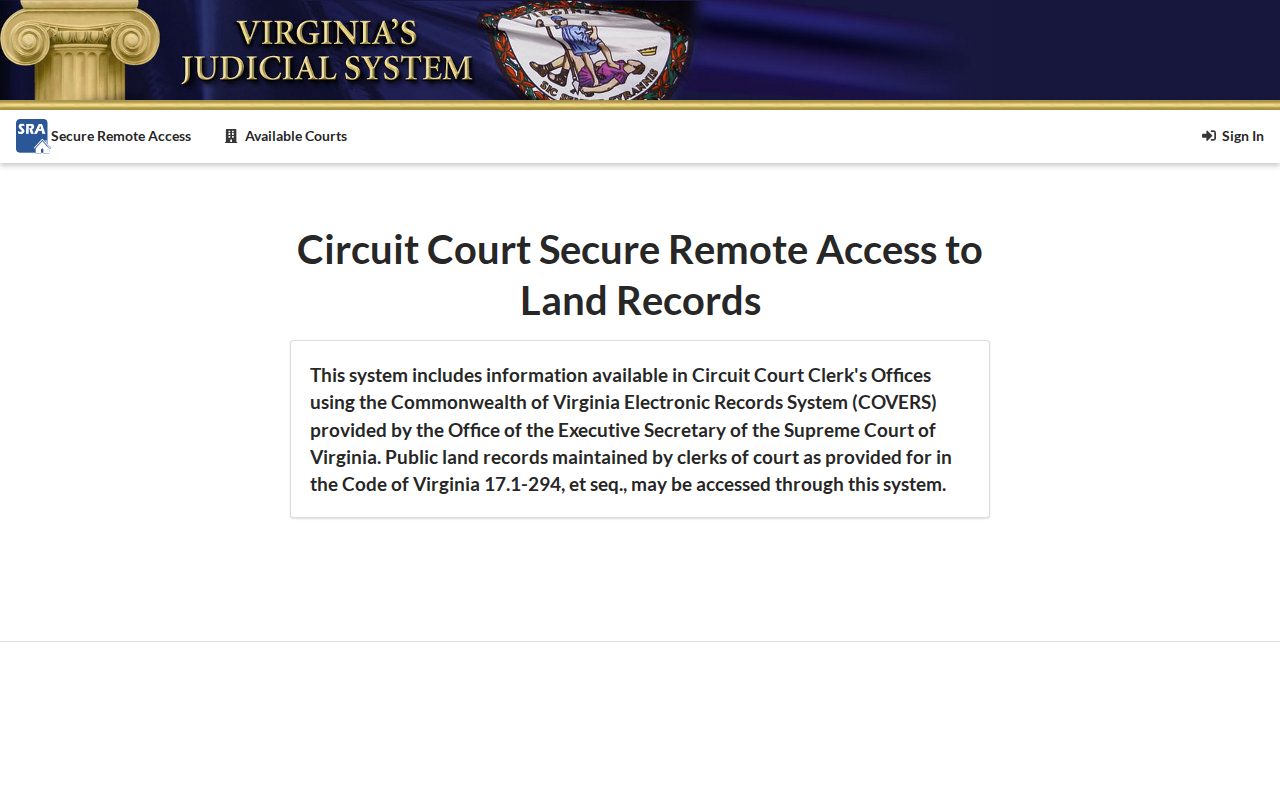
Start remotely at the entry screen; the Clerk confirms coverage.
Virginia Courts explains SRA index and image access for land-record users.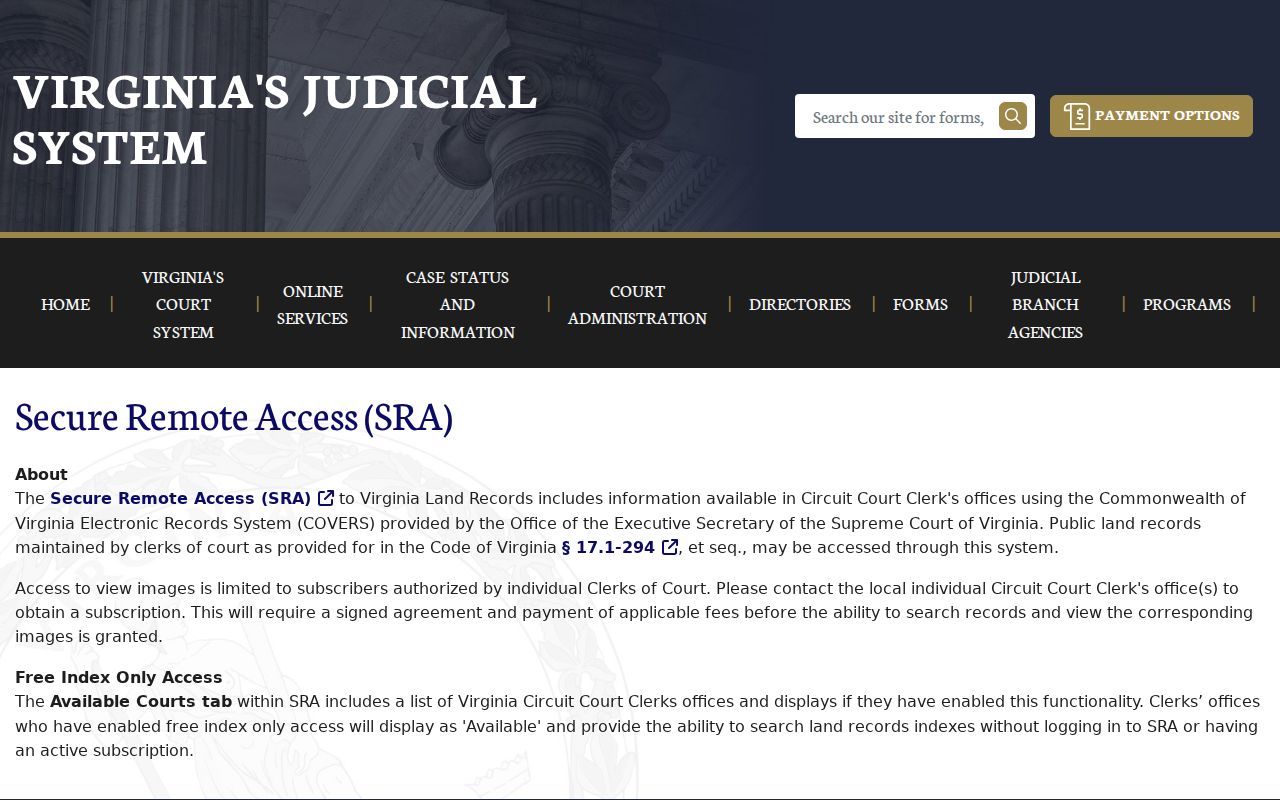
Check the access note first, since the index alone may not cover what you need, and plan a clerk-assisted image request for the rest.
Page County Deed Records Before 1831 May Be in Earlier Counties
Page County was formed in 1831 from Shenandoah and Rockingham counties, so a chain predating that boundary may continue in a predecessor's deed, will, tax, or court books. The trail rarely disappears. What looks like the end of an online Page County search is often just a change of jurisdiction, not a missing deed.
Work the newest deed's prior reference through the Page County books. Stop at the 1831 line. Then move to the predecessor counties' indexes. Surname variants and neighboring landowners help when a handwritten entry resists reading. Keep every book/page citation across jurisdictions.
Ask the Clerk where online deed imaging begins. For older material, ask about books and microfilm. The Library of Virginia and FamilySearch catalogs list digitized volumes by place. Confirm the county and year before treating a digitized volume as your parcel's record.
The Library of Virginia catalog is a starting point for older Page County land and court sources.
Treat the catalog as a finding aid, then confirm the volume and jurisdiction with the archive or courthouse.
Probate Can Change a Page County Deed Records Chain
An owner can die before a later transfer reaches the record. The parcel may then pass through a will, an executor's or administrator's deed, a court order, or a deed signed by heirs. Search the deceased owner both ways. Run the name as grantor and as grantee in the land index, then search probate under the decedent's name. Compare the death, qualification, execution, recording, and assessment dates.
Sometimes a will names land but no deed appears. Request the probate file or the order, and ask the Clerk how the devise was recorded. If heirs conveyed the parcel, confirm that the relevant fiduciary or heir interests appear in the chain. Probate explains authority or inheritance, but the land instrument still records the conveyance.
Virginia keeps death records private for 25 years. The certificate is not title evidence. Deeds, probate files, and court orders explain the transfer.
Page County Deed Records Can Connect to Court Orders
A foreclosure, quiet-title suit, or partition case can change a deed chain. Meanwhile, the property card may still list an older owner of record. Page County Circuit Court holds the land records. It also holds the civil files that touch real property. Virginia's statewide case-information portal lets you search a case by party name or number. Its exact search fields vary by locality, so treat it as a starting point.
When a case looks relevant, note the case number. Also note the parties, the parcel description, and any lis pendens. Then look for the final order and any deed recorded after judgment. The docket alone is not a deed. Ask the Clerk to pull the file. Then match the court order to the recorded instrument before calling it a transfer.
Note: this cross-check helps with an unusual title trail, but it never replaces reading the recorded deed itself.
Distinguish Page County Deed Records From Encumbrances
A chain review covers more than conveyance deeds in Page County. Deeds of trust, releases, certificates of satisfaction, easements, rights-of-way, boundary-line agreements, liens, judgments, and lis pendens can all shape how land is used. They can also shape how land is sold. Ask for these record types whenever you work through the deed records.
For a deed of trust, find the later release or certificate of satisfaction. Confirm it points to the same instrument. For a lis pendens or judgment, tie the land record to the civil case. Then check its final order. A plain-looking assessment card proves nothing about cleared encumbrances.
Use the deed index to spot candidate instruments. Then read each record itself. A title professional, not a public index, can certify whether title is clear.
Request a Page County Deed Copy From Its Custodian
Start with SRA/COVERS for remote index discovery. Then check with the Page County Circuit Court Clerk about viewing or obtaining the deed. If no image is available online, a courthouse terminal offers a reliable in-person fallback. Copy fees, counter hours, and certified-copy rules change. So ask the Clerk before you travel or mail a request.
Have your details ready. List the grantor and grantee. Note the approximate recording date, the deed book and page or instrument number, and the parcel description. Say whether you want inspection, a plain copy, or a certified copy. If you lack a citation, tell the Clerk you need help locating an instrument. Supply the property address and known parties.
Recorded, not guaranteed. The index shows recorded instruments, not every possible interest or a legal title opinion. Have a title professional review the chain when clear ownership must be established.