
What the Page County Current Owner Record Shows
The county publishes a public name field. The exact label on a live card is not confirmed. Its real-estate page also lists address, description, deed-book reference, lot dimensions, buildings, and acreage. Fair-market value for land and buildings appears there too. Read these fields together to pin down the parcel. Some cards may omit tenancy, vesting, a last-sale date, or an update timestamp. Do not count on those details appearing.
| Name field | County-listed name; exact live label is not verified |
|---|---|
| Legal description | Parcel description and lot dimensions to match with the deed |
| Mailing address | Address for county mail, which may differ from situs |
| Situs address | Location used to identify the parcel |
| Deed reference | Book reference that can lead to the recorded instrument |
| Valuation details | Land and building value categories; not a sale-price finding |
The assessment name is not the occupant. A tax mailing address shows where county correspondence goes, not proof of residence. Page County publishes no occupant list. Virginia law lets protected addresses be redacted or replaced. Treat the name as the owner of record for tax purposes only.
Confirming the Page County Current Owner
Confirming the owner takes two records. Compare the county name field with the newest recorded deed. Search the named party as grantee in SRA/COVERS. Check the recording date, the grantor, and the legal description or parcel number. A transfer recorded after the last card update explains many mismatches. General reassessment in Page County runs on a four-year cycle. The Board of Supervisors can decide otherwise. The county publishes no card-refresh lag.
- Search the property card by address, parcel number, or name and note the county-listed name and description.
- Search the latest deed index entry with that party as grantee and copy the recording reference.
- Read the instrument and match its legal description to the parcel card.
- If an LLC is named, use Virginia SCC filings for entity context; do not substitute an agent's name for the grantee.
- Contact the custodian if the card and deed differ, and ask which record date explains the difference.
- Owner of record
- The name shown in the relevant public record, subject to its update timing.
- Grantee
- The party receiving the interest in a recorded deed.
- Mailing vs situs
- The tax-mail address can differ from the parcel's physical location.
The Page County Current Owner Name Is Not a Title Certificate
The county lists a name field among its public property information. It never labels that field Owner. No timestamp appears, and no refresh schedule is published. Treat it as the assessment name. Then verify the person or entity against the recorded instrument that conveyed the parcel. Courthouse transfers feed the parcel and building assessment data, per the county. General reassessments occur every four years unless the Board of Supervisors decides otherwise. Those are separate record dates. A just-recorded deed can be newer than an assessor card, though the exact lag is unpublished. When a date matters, compare the deed's recording date with the current card. Ask the Commissioner which roll information is current.
The county's real-estate page describes the name, address, description, and value fields.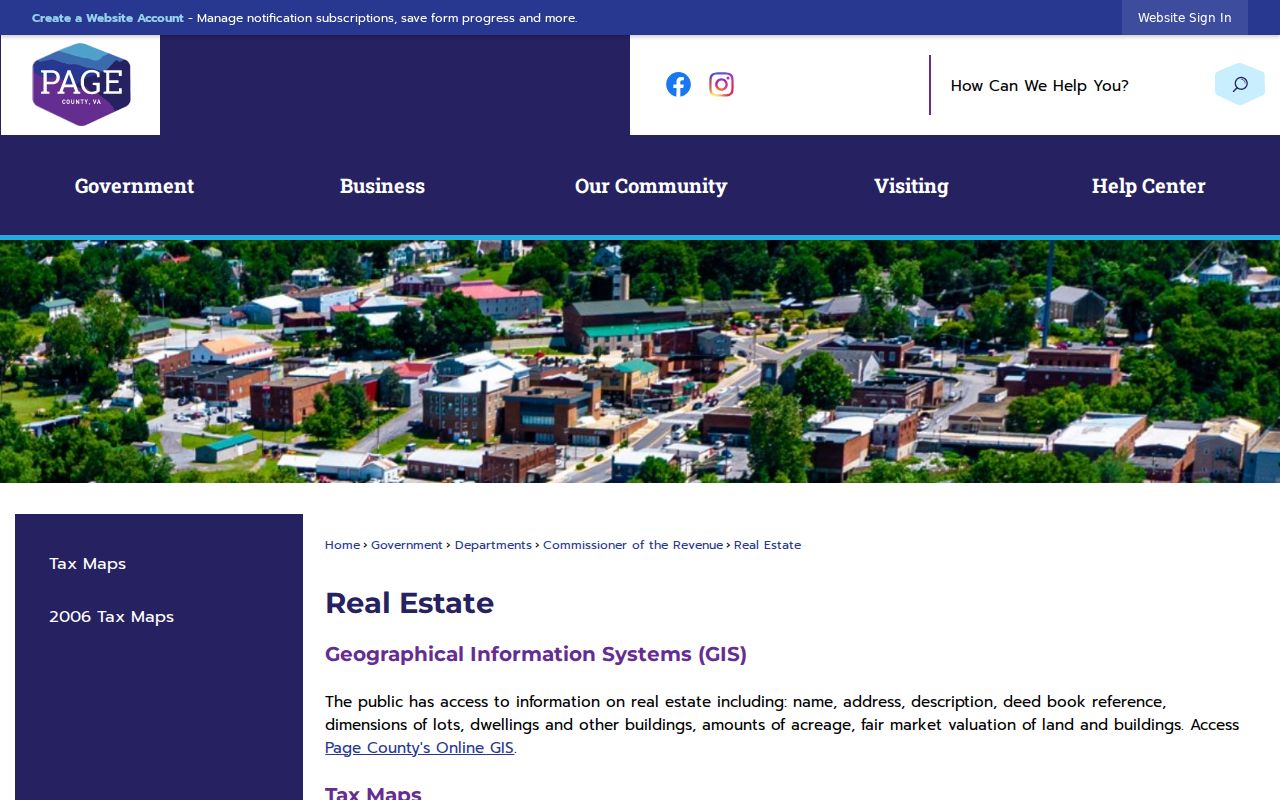
The field list lets you compare roll and deed.
Page County Current Owner Records Have Different Update Dates
A recent transfer, new building, or parcel change can reach different systems at different times. Assessment data draws on courthouse transfers and permits. The deed index records the instrument itself. The tax inquiry keeps its own account and ticket history. No county source states a fixed number of days between these updates. Do not treat the four-year reassessment cycle as a substitute for a recent-deed search. That cycle governs county-wide valuation. Individual records can change at any time. Check the deed date and confirm whether the Commissioner has updated the record. Keep three dates in your notes. Record the deed execution date if shown. Note the recording date too. Add the date you viewed the assessment record. Those dates explain what each source could have known at the time.
Town Parcels Still Use the Page County Current Owner Record
Page County has three incorporated towns. No town runs its own assessor or land recorder. The county Commissioner, Treasurer, GIS, and Circuit Court Clerk remain the shared property-record route for Luray, Stanley, and Shenandoah. Town offices hold local permits, zoning, utility, street, code, and notice records. A mailing address alone may not show jurisdiction. Use county GIS and road-atlas context to check the town line. Then ask the town office about permits or zoning. County guidance sends town-limit owners to the local office for zoning permits and setbacks. County-side parcels use county processes. This matters when an owner needs a deed and a work-history file, since the first is a county court record and the second may sit with a town.
Check Court Records for Page County Current Owner Changes
A name difference can come from an estate transfer, a deed signed by heirs, or a court order affecting title. Page County probate materials include wills, inventories, accounts, fiduciary appointments, and estate distributions. Search the deceased party in probate and land records. Then compare dates and legal descriptions. A will can explain who receives land. A separate deed may not exist. If an estate representative conveyed the parcel, review the fiduciary instrument and authority. A quiet-title or partition decree can also control even when the assessor still shows an earlier name. Use the Circuit Court Clerk and the case file. The current owner record reflects the present. For transfer history, use the Page County deed-record guide and follow each grantee back through the index.
Page County Current Owner Search if the Card Will Not Open
Page County's E-Services directory describes View Property Cards as a tool for owner-name searches. It also covers parcel-number and address searches. The card link itself can fail, though, and may return an error page. When that happens, contact the Commissioner of the Revenue. Have the parcel address, the name spelling you have, and any deed reference you know. The real-estate line is 540-743-4909.
For recorded owner of record evidence, the SRA index may still be reachable. Deed images sit behind a clerk-authorized subscription. Ask the Circuit Court Clerk about the courthouse terminal and the current copy process for deed records. The index start year and copy fees are best confirmed with the clerk's office directly.
The captured property-card route did not provide a sample Page County parcel record.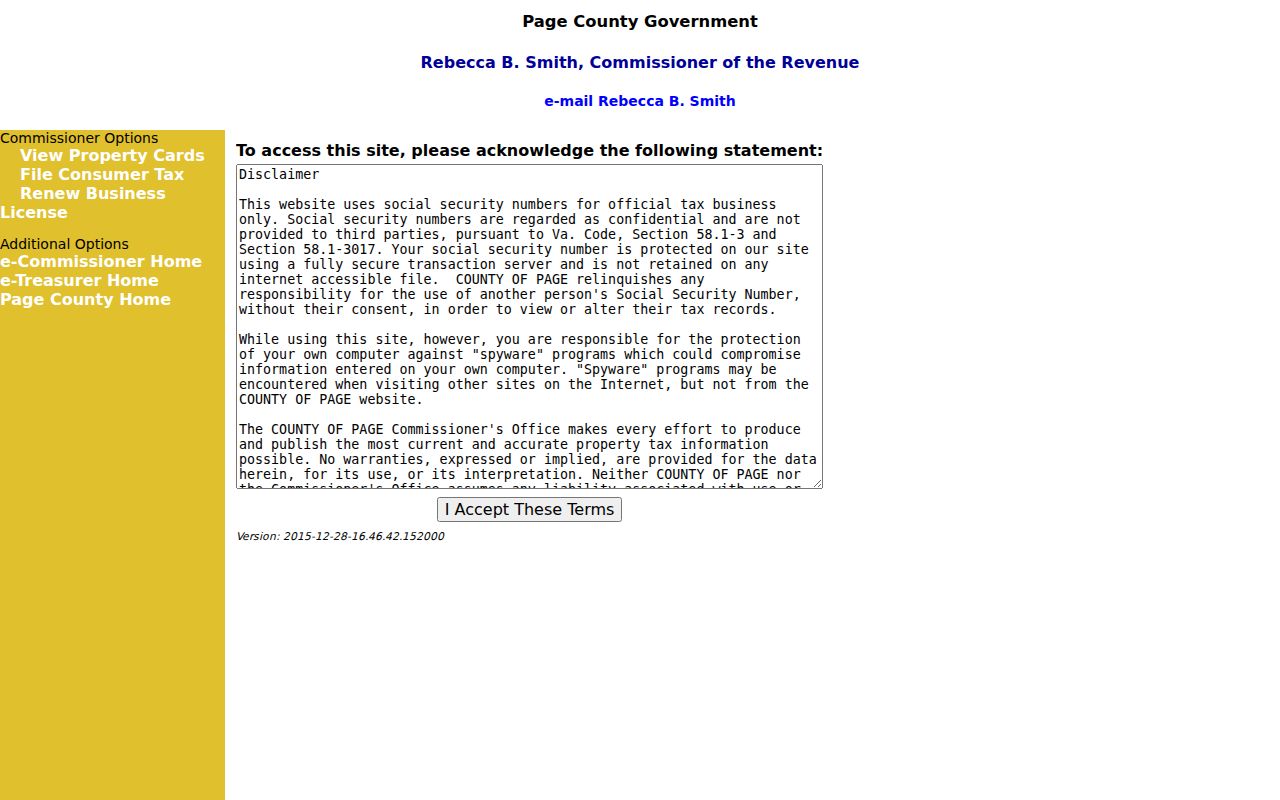
Note: Any error page shown here reflects an access gap only, not evidence about an individual property's ownership.
Reaching a Page County Current Property Owner
An owner's mailing address on an assessment record is public, but it may not be where the person lives. Virginia runs an Address Confidentiality Program that gives eligible participants a substitute address, and statute allows some records to be redacted. Use the address for a legitimate property matter. Respect any protected information you come across.
Lawful use. Use public owner information for a property-related purpose. Do not use the name or address to track, threaten, harass, or intimidate anyone, and do not try to defeat a statutory address protection.