
How to Find Who Owns a Page County Property
A Page County owner lookup starts with the E-Services View Property Cards route. The county accepts an address, an owner name, or a parcel number. The real-estate page confirms a public name field. Pull the card first. Then take the current name as grantee and search the newest deed in SRA/COVERS. Compare the legal description, the recording date, and the parcel reference. That tells you the deed is the right transfer. If the online property card will not open, fall back on the Commissioner of the Revenue. That office maintains the assessment records behind it.
- Search View Property Cards by the property's address or parcel number and note the displayed name and description.
- Search the Circuit Court land index for the latest deed naming that party as grantee.
- Compare the deed's legal description and prior reference with the property card before confirming the parcel.
- If the grantee is an entity, check Virginia SCC business filings for entity details; do not assume a member is the landowner.
- Keep any mailing address separate from the situs, and use official channels for follow-up requests.
Page County Property Owner Records: Where the Name Appears
Several Page County records each carry a name for a different reason. The assessor's property record holds the public owner field. A recorded deed names the grantor and grantee behind a transfer. The Treasurer's tax account lists the taxpayer and payment history. GIS places the parcel on the map. The state SCC can confirm a business entity and its filings. It cannot show which property that entity received. Only the deed does that.
| Source | Owner Info It Gives | Access |
|---|---|---|
| Commissioner property card | County name field, address, description, dimensions, and value categories | E-Services directory; call office if card link fails |
| Circuit Court deed index | Grantor, grantee, recorded instrument, and legal description | SRA index where enabled; images may need subscription |
| Virginia SCC CIS | Entity and UCC filings; entity details depend on record | State business filing system |
| GIS and Treasurer | Parcel context or taxpayer payment history | Public map and tax inquiry |
A name on an assessment record is not always the occupant or the person handling day-to-day care. The mailing address can differ from the parcel's situs too. These public systems are property and tax records, not an occupant directory.
Read a Page County Property Owner Name Alongside the Deed
Treat the name on a county card as the assessment name. The county confirms the field exists but not its live label or refresh schedule. Set that name beside the newest recorded deed. If they differ, check recording dates and instrument references before concluding the card is wrong. The land index often runs ahead of the card after a closing. Deed recording and assessment updates are separate events. Names vary for plenty of reasons. Initials, joint ownership, a trust, an estate, or an entity spelling can all shift the wording. Search reasonable variants where the interface allows it. Lean on the legal description as the stronger link between records. Two parcels never merge just because owner names look alike.
Page County's real-estate page lists the publicly described name and property fields.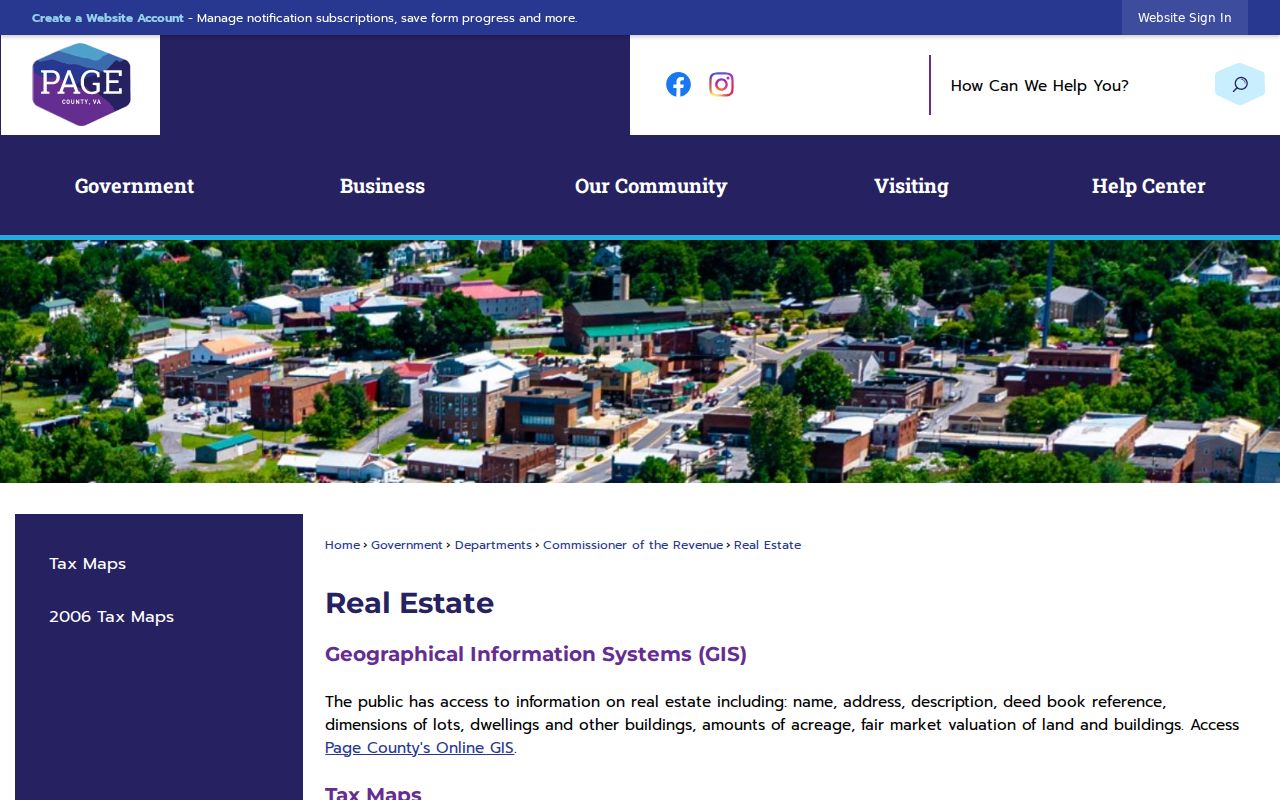
The official description identifies the categories to compare, without confirming a sample card label.
Check a Page County Property Owner Held by an LLC or Trust
A deed may name an LLC, a trust, an executor, an administrator, or another fiduciary. It may not name a person. Search the exact grantee name in the land index, punctuation and distinctive words included. Then read the instrument for its authority and legal description. For a business entity, Virginia SCC's Clerk's Information System is the state-held source. It covers entity and UCC filings. Entity filings can surface a registered agent or filed details. They cannot, on their own, prove ownership of a particular Page County parcel. Only the recorded deed connects the grantee to the land. When an estate is involved, probate files, wills, qualification orders, and fiduciary deeds may explain it. They may show how authority passed before the transfer. Use the official filing system for entity research. Also check the live portal for current account or payment requirements.
Open Virginia SCC Clerk's Information System for business and UCC records.
Entity filings explain a name or a registered agent. The deed remains the record that ties a grantee to a Page County tract.
Confirm Who Owns Property After a Page County Closing
Courthouse transfers feed assessment data, per the county. General reassessments run on a four-year cycle unless the Board of Supervisors decides otherwise. The county does not say how long a new name takes to reach a card. So if the tax roll still shows the prior party after a sale, check the newest recorded deed first. Note its recording date too. Search the buyer as grantee, confirm the parcel description, and keep the instrument reference. The index may show an entry without an image. Virginia's SRA guidance says image access can require a clerk-authorized subscription even with a free index enabled. The Circuit Court Clerk's terminal is the local fallback for inspection. This route shows who appears in the current public records. It does not guarantee every unrecorded claim or later legal order surfaces.
Town Addresses Still Use Page County Property Owner Records
Luray, Stanley, and Shenandoah each have a town hall. None of them runs its own assessor or recorder, though. Page County offices and the Circuit Court still hold the deed records. The tax roll and property cards sit there too, for every parcel inside town limits. Town offices keep other things. Zoning files, utility accounts, street records, cemetery plots, and permits often live there. They are not at the county.
A parcel with a Luray mailing address may still sit outside town limits. The county publishes no official ZIP boundary table, so a mailing city proves nothing. County guidance tells town-limit owners to contact their town office. Ask there about zoning permits and setback rules. Before that, check the county GIS map and road atlas. See where the parcel actually falls.
The office that names the owner of record rarely holds a local permit. Match both answers to one legal parcel number before you rely on either.
Request Missing Page County Property Owner Records
Page County's E-Services directory lists a View Property Cards tool by owner, parcel, or address. The card link currently returns a 404 error. If it still fails, contact the Commissioner of the Revenue with the parcel address, any known owner name, and a map or deed reference. The Commissioner's real-estate line is 540-743-4909.
Missing deed images belong to the Circuit Court Clerk. Ask the Clerk about the deed index, the courthouse terminal, and the copy process. The county publishes no current copy fees or online coverage start date, so request the current terms directly rather than borrowing a fee or date from another locality.
The captured property-card endpoint failed to provide a live sample record during research.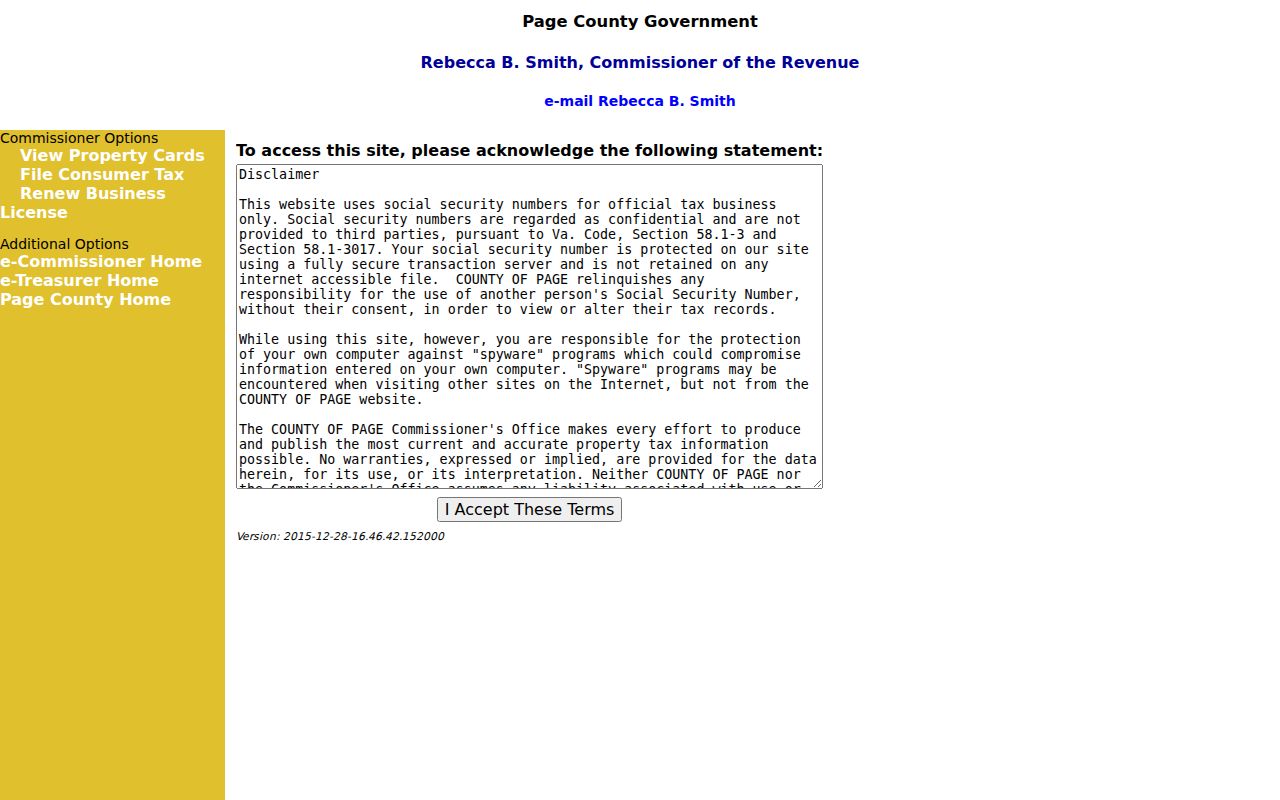
The image is evidence of the access gap, not a property result.
What a Page County Who-Owns Search Cannot Tell You
A public record only names the parties within its own scope. It cannot confirm who lives at a given address. Virginia's Address Confidentiality Program gives eligible protected participants a substitute address. Some records are redacted by law. Those protections stand even when a record is public. A name search in Page County property records is also no substitute for a title search. It cannot replace an appraisal or survey.
Lawful use. Use owner information for property research and due diligence. Do not combine public records to bypass a protected address or use a name or address to threaten, harass, or intimidate anyone.