
Tracing Former Owners of a Page County Property
For Page County, the strongest starting point is the newest deed in the Circuit Court land records. SRA/COVERS serves as the remote entry point. The county publishes no fixed start year for its online coverage. Older transfers live in courthouse books and microfilm. FamilySearch and Library of Virginia catalogs list early volumes. Because Page County formed in 1831 from Shenandoah and Rockingham land, a chain older than the county may require records from one of those predecessors.
| Transfer point | Grantor to grantee | Instrument / reference | Next step |
|---|---|---|---|
| Latest deed | Read the named grantor and grantee | Recording date and deed reference shown on instrument | Search the grantee as the next link |
| Prior deed | Carry the earlier grantor and grantee forward | Book/page or cited instrument | Match the legal description |
| Older book or microfilm | Continue the prior chain where remote coverage stops | Ask the Circuit Court Clerk for volume or film | Search names and neighboring land references |
| Pre-1831 transfer | May involve Shenandoah or Rockingham parties | Predecessor county court and land books | Confirm the jurisdiction for that date |
Search the online index first. Move to the courthouse for images or older volumes. The county publishes no exact digital cutoff, so confirm microfilm date ranges with the Clerk. Treat library catalogs as finding aids, not a promise that every image is digitized or free of restrictions.
Walk Back Through Page County Former Owner Deeds
Begin with the current grantee in the newest recorded deed. The grantor names the prior owner. The deed's cited book and page become the next target. Search that grantor as a grantee, and match the legal description. Then repeat the process. Where name spellings vary, lean on the parcel description and neighboring-owner clues as checks.
- Find the latest deed and note the current grantee, grantor, recording date, and parcel description.
- Copy the cited prior deed reference and search the earlier grantee in SRA/COVERS.
- Compare the tract description before accepting a name match.
- Repeat backward until the index ends or the research crosses the 1831 county boundary.
- Continue with courthouse books, microfilm, or predecessor-county records as needed.
- Grantor / grantee
- The parties conveying and receiving the stated interest.
- Chain of title
- The connected history of transfers and other title instruments.
- Legal description
- The tract description to match when street names or numbers have changed.
Page County Former Owner Index Has No Verified Start Year
No official source states a start year for Page County's online land records, so never borrow a cutoff from another Virginia locality. Check SRA/COVERS for the index. Save every reference. Ask the Clerk how far local books extend.
Virginia's SRA page sets the access rules. Index access can be free when an individual clerk enables it, while images may require a clerk-authorized subscription, a signed agreement, and payment. A result without an image is not the end. The courthouse terminal remains the local fallback, and the Clerk can point to an older book or a copy route.
Start with Virginia SRA/COVERS for the online land index.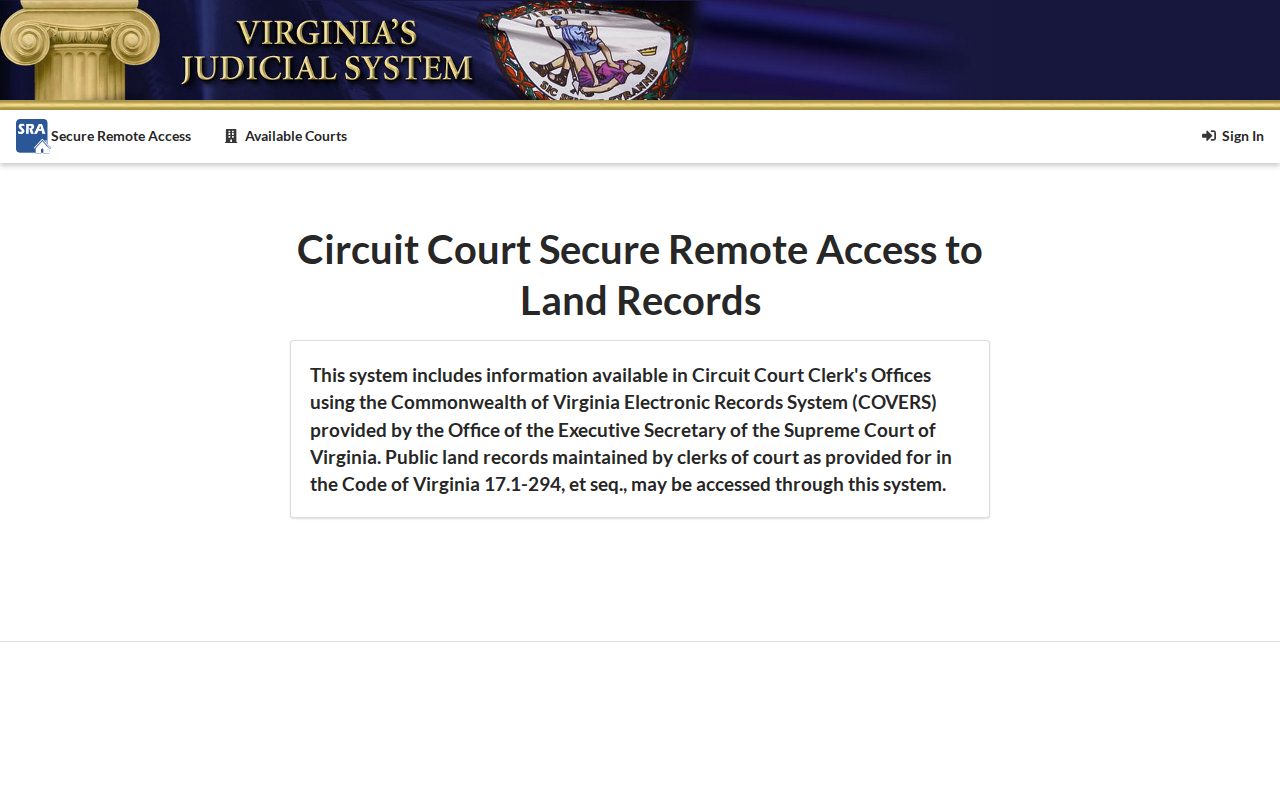
The SRA page is only an index gateway.
The Virginia Courts SRA guide describes the different index and image routes.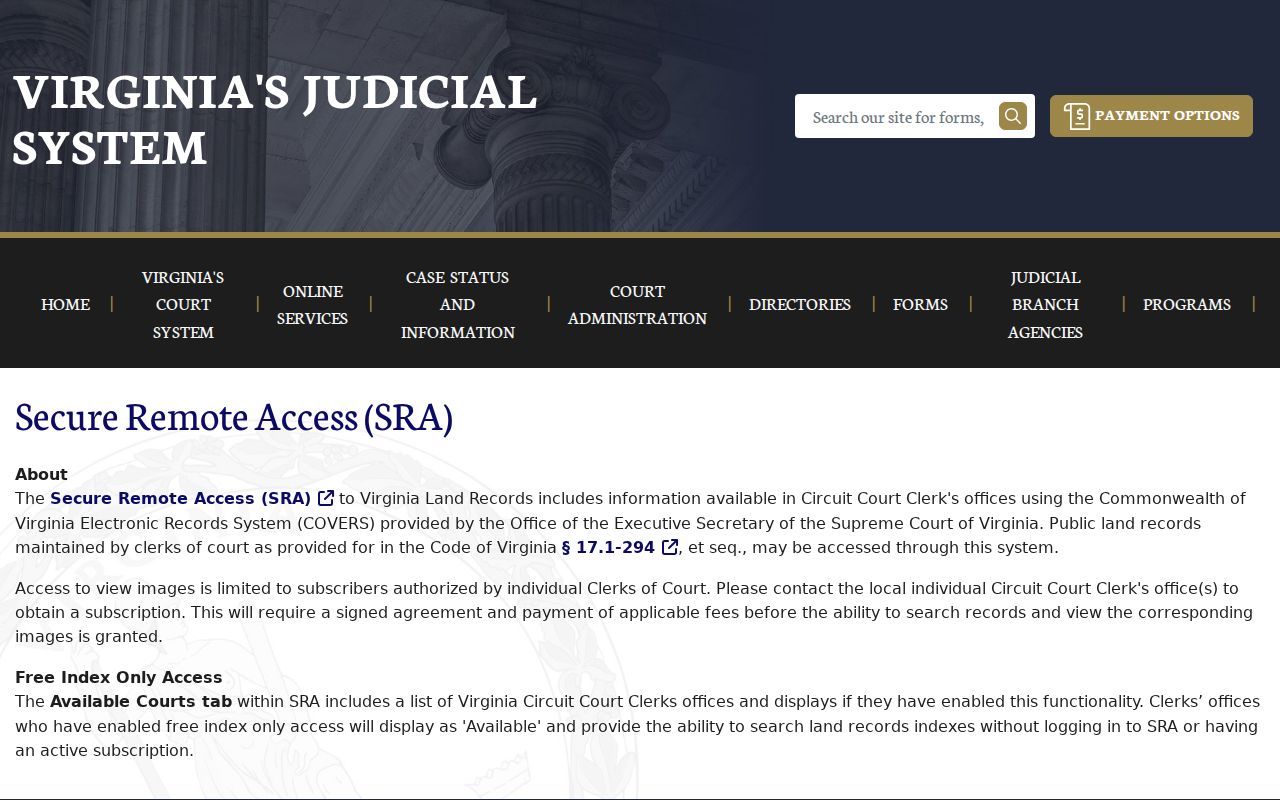
Use this distinction to plan a courthouse search when the remote chain stops.
Page County Former Owners Before 1831 May Be in Earlier Books
Page County was created in 1831 from Shenandoah and Rockingham counties. A pre-1831 conveyance may sit in either predecessor system. The land's location and the record date decide which. When the chain stops, look for an older book. Confirm which predecessor county held jurisdiction then.
Carry the legal description into the predecessor search. Bring adjoining landowner names and older place wording too. A modern street address rarely fits an early index, and family spellings drift over time. Compare acreage, boundary calls, waters, roads, and neighboring tracts. Never trust a single name field.
Historical holdings may include deeds, wills, court orders, and land books. Courthouse and archive catalogs can identify the volumes. Only the record itself shows a true match to the parcel.
Page County Deed Books Extend Former Owner Research
The Library of Virginia and FamilySearch anchor the historic search for Page County deed books. Look up the county by place in each catalog. Predecessor counties matter when the chain crosses the old county line. FamilySearch items may cover deeds, wills, court orders, land books, or plats. Image availability and account rules vary by item.
The Library's vital records and newspapers add family context. Town directories for Page County, Luray, Stanley, and Shenandoah are helpful. They are not a substitute for a deed. Use archival descriptions to find material. Verify the land transfer in a deed or court instrument.
Browse the Library of Virginia catalog for local court and land finding aids.
A catalog entry suggests a collection; it never guarantees an image.
Probate Can Change a Page County Former Owner Chain
A death could move land without an ordinary sale. The later transfer may appear as a will, an executor's deed, an administrator's deed, a court order, or a deed from heirs. Search the deceased owner in the land index. Then look for probate files, fiduciary appointments, and estate distributions under the same name. Compare dates and descriptions to trace the interest.
A will may name property while no deed stands out. Ask the Clerk how the devise is reflected in the land records. Request the relevant order or file. When heirs conveyed the parcel, check who signed and whether a fiduciary acted. The death record itself is not the title document. Virginia limits public access to death records for 25 years.
Virginia's genealogy guidance explains the older vital-record access route that can help establish family context.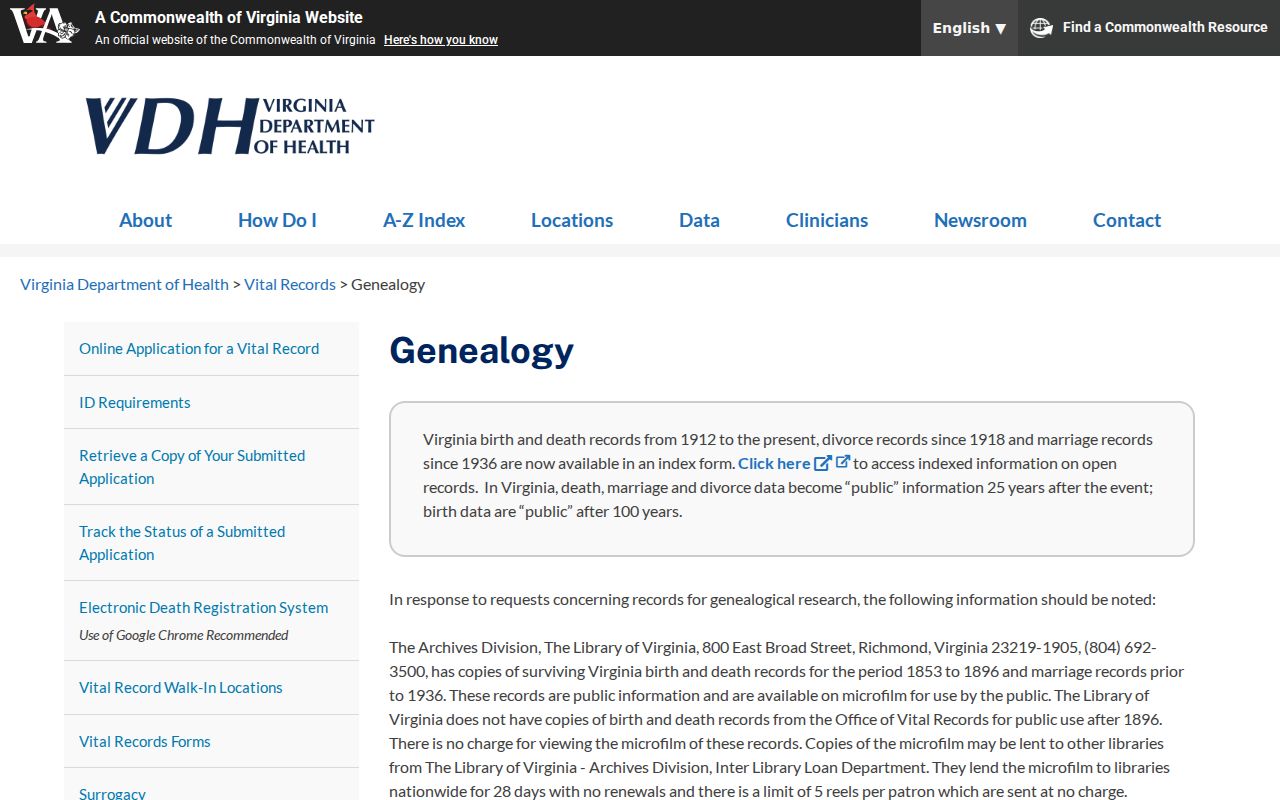
A vital record supports the story. It is not a title document and cannot replace a deed, will, or court order. Record the instrument that changed the interest, not just a family relationship from an obituary or directory.
Use Page County Plats When Former Owner Addresses Changed
A legal description beats a street address as a historical key. Street names change, numbers get reassigned, and town labels shift over the decades. A recorded subdivision plat pins down the lot and block. A rural deed may describe the tract through metes and bounds, easements, reservations, and the names of adjoining owners. Page County's road atlas helps you locate roads, but it is not a subdivision plat. It will not carry you back through an old chain of title.
Search instead for the plat or deed reference named in the transfer. Then request that instrument from Circuit Court land records. The county publishes no named subdivision plats online and offers no public plat-download endpoint. So work from the book and page or instrument reference rather than guessing at a subdivision name. If a tract was split or combined over the years, trace each referenced parcel description through the later instruments one at a time.
Some older chains simply refuse to match any modern street address. In that case, compare the acreage and boundary calls against a survey or a current parcel map. A boundary question that still will not resolve is a job for a licensed surveyor.
How Far Back Page County Former Owner Records Go
Page County's earliest online deed year is not established. Nor is the exact microfilm date range. No courthouse loss event is documented. The county itself dates to 1831. Older land trails can run back into Shenandoah or Rockingham deed books. Treat any online stop as a coverage question to raise with the Clerk. An absent record online is never proof. No earlier owner or deed failed to exist just because of that.
Lawful use. Former-owner research supports house history and property diligence. Do not use a past or present owner's name to track, threaten, harass, or intimidate anyone.